
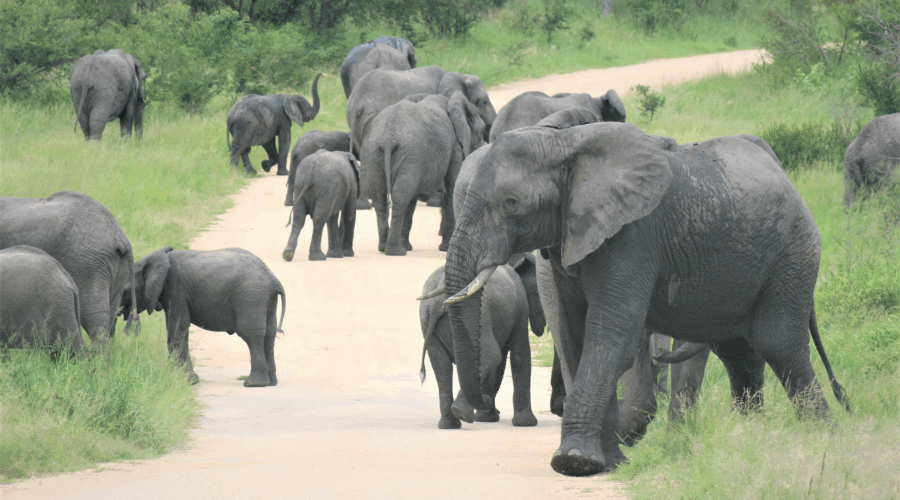
African Elephant Facts: The Sentinels of the Savanna: The Definitive Guide to the African Elephant
African Elephant Facts. The African Elephant (Loxodonta africana) is not just a member of the famous “Big 5”; it is the heartbeat of the African wilderness. Standing as the largest land mammal on Earth, these “ecosystem engineers” possess an intelligence and emotional depth that rivals our own. From their massive physical presence to their complex family lives and survival tactics, here is the complete guide to everything there is to know about these majestic giants.

1. Size and Statistics: The Weight of a Giant
To understand the elephant, you must appreciate its specialised anatomy and the sheer scale of its existence.
- Physical Power & Statistics: Adult bulls can weigh between 5,000kg and 7,000kg (up to 7 tons) and stand roughly 3.2 to 4 meters tall at the shoulder.
- Ears: Large, fan-like ears act as a natural cooling system, radiating heat to help the elephant stay cool in the intense South African sun.
- Skin & Care: Despite being called “thick-skinned,” their skin is sensitive. They use mud baths and dust as a natural sunscreen and insect repellent.
- Sleep: In the wild, elephants are remarkably active, sleeping for only about 2 hours a day, often while standing up.
2. The Master Tools: Tusks and Trunks, Elephant Tusk vs Trunk
The Tusks: Ivory Evolution
Elephant tusks are essentially elongated incisor teeth that grow throughout the animal’s life.
- Formation: They are composed primarily of dentin (ivory) and lack the enamel coating found on most teeth, making them slightly softer but highly flexible.
- How They are Used: Elephants use their tusks as versatile tools for digging for water or salt, stripping bark from trees, clearing paths, and as weapons during defense or dominance battles.
- History and Sizes: In the past, “Great Tuskers” with ivory reaching the ground were common. Historically, tusks could weigh over 100 kg each.
- Legendary Giants: History remembers giants like Satao and Ahmed. In the Kruger National Park, the “Magnificent Seven” were a legendary group of bulls recognised for their massive ivory.
The Trunk: A Multi-Purpose Marvel
The trunk is a fusion of the upper lip and nose, representing one of the most complex appendages in the animal kingdom.
- Anatomy: It contains no bones and over 40,000 individual muscles, giving it incredible precision and strength.
- Versatility: It is sensitive enough to pick up a single blade of grass but strong enough to rip entire branches from trees.
- Daily Use: Elephants use their trunks to breathe, smell, drink (siphoning up to 10 liters of water), and communicate.
3. African Elephant Social Behaviour, Social Intelligence & Family Life
Elephant society is defined by empathy, protection, and lifelong bonds, structured around a complex matriarchal system.
- The Matriarch: Led by the oldest and wisest female who holds the “map” of the terrain in her memory.
- Communication: They use infrasound—low-frequency rumbles—to coordinate movements across several kilometers.
- The Life of a Calf: With a gestation period of 22 months, newborns weigh roughly 100 kg. They spend nearly a year mastering their trunks through play.
Predator Defense: Protecting the Vulnerable
Elephants are fiercely protective of their young, especially against predators like lions.
- The Defensive Circle: When a threat is detected, the adults quickly form a tight “protective ring” with their heads facing outward and tusks ready, placing the calves safely in the centre.
- Vocalisations & Charges: Adults will trumpet loudly and perform mock (or real) charges to intimidate and drive away predators.
- Allomothering: Young aunts and sisters stay in constant physical contact with calves to ensure they never wander into danger.
Grief and Mourning
Elephants are among the few species known to have a profound understanding of death.
- Silent Vigils: Families have been observed standing over the bodies of deceased members for days in silent vigils.
- Touching the Dead: They use their trunks to gently touch the face and tusks of the deceased or even carry the bones of family members.
- Emotional Memory: Herds have been known to visit the site where a family member died for years afterwards, exhibiting quiet, sombre behaviour.
4. Habitat & Ecosystem Engineering
Elephants are “ecosystem engineers” because they physically change the world around them for the benefit of other species.
- Habitat: Found in savannas, woodlands, and riverine forests like the Kruger National Park, as well as cross-border corridors.
- Diet: As mega-herbivores, they consume up to 150kg of vegetation daily, including grasses, bark, roots, and fruit.
- Impact: By pushing over trees, they turn thickets into grasslands; by digging in dry riverbeds, they create waterholes for other species.
5. Safari Etiquette: Do’s and Don’ts
Encountering a 7-ton animal requires respect and an understanding of their body language.
- Do: Keep a distance of 30 to 50 meters, watch for relaxed ears, and always give them the right of way.
- Don’t: Never rev the engine, don’t get between a mother and calf, and never block their escape route.
6. Sustainability & Ethics
At AfricaBigSafaris, we prioritize the protection of ancient migratory paths, ensuring these giants can move freely across borders. By choosing ethical tours, you directly support the conservation of these sentinels of the savanna. Big 5 Safari South Africa, Elephant Conservation and Ethics
7. Identifying the Giants: Differences Between Bulls and Cows
Distinguishing between male (bull) and female (cow) African elephants requires looking at the physical profile of their heads and overall body structure. Bulls tend to be significantly larger and carry much heavier, thicker tusks, but the most reliable indicator is the shape of the forehead: females have a distinct, angular “boxy” forehead with a sharp turn at the top, whereas males have a more rounded, sloping profile.
When it comes to their tracks, size and shape are the primary giveaways. Bull tracks are generally larger and more circular in shape to support their immense weight. Cow tracks are typically smaller and more elliptical or oval-shaped, as they carry less bulk than the massive bulls. Additionally, in a herd setting, the presence of smaller calf tracks alongside an adult track almost certainly identifies that adult as a female.
Summary Table: African Elephant Facts
| Feature | Detail |
|---|---|
| Weight | Up to 7,000kg (7 Tons) |
| Diet | Herbivore (150kg/day) |
| Social Structure | Matriarchal Herd |
| Trunk Muscles | Over 40,000 |
| Gestation | 22 Months |
1. Elephant Conservation & Ethics (South Africa Focus)
Elephants Alive. They have been conducting scientific research for over 25 years to ensure the survival of the region’s elephant populations.
2. The “Magnificent Seven” Research Study
SANParks’ official record. This page provides the specific history, tusk data, and the legacy of the original “Magnificent Seven” and subsequent “Big Tuskers.”
3. Scientific Research & Diet Study
4. Global Research Library
Read: https://savetheelephants.org/research/
Frequently Asked Questions About African Elephants
How much does an African Elephant actually weigh?
Adult bulls are the largest land mammals on Earth, typically weighing between 5,000kg and 7,000kg (up to 7 tons), and standing nearly 4 meters tall at the shoulder.
What is the difference between a trunk and a tusk?
The trunk is a bone-less fusion of the upper lip and nose containing over 40,000 muscles used for breathing, drinking, and grabbing. Tusks are actually elongated incisor teeth made of ivory (dentin) used for digging, clearing paths, and defense
How do elephants communicate if they are far apart?
Elephants use infrasound, which are low-frequency rumbles below the range of human hearing. These vibrations can travel several kilometers through the ground and air, allowing herds to coordinate movements across vast distances.
Are elephants really “ecosystem engineers”?
Yes; they physically reshape their environment by pushing over trees to create grasslands for other grazers and digging into dry riverbeds to create waterholes that save other species during droughts.
How long is an elephant pregnant?
Elephants have the longest gestation period of any mammal, carrying their calves for 22 months before giving birth to a newborn that weighs roughly 100kg.


