The Ultimate Guide to Southern Africa’s Big 5 Series: Beyond the Famous Giants
From the Iconic Savannah Kings to the Elusive Impossible 5, Discover the Diverse Creatures of the African Bush
Discover the complete Big 5 Series with Africa Big 5 Safaris. Explore the Big 5, Little 5, Ugly 5, and the elusive Impossible 5 across Southern Africa’s rich ecosystems.
Southern Africa’s Big 5 Series: In the world of Southern African safaris, trackers and guides use these specialised “groups of five” to highlight the incredible diversity of the bushveld. The Big 5, The Ugly 5, The Impossible 5,
While most travelers arrive dreaming of tracking heavy megafauna through the Kruger or Lowveld reserves, taking the time to observe every tier of the ecosystem—from majestic carnivores to tiny macro-insects—transforms a simple game drive into an enriched, deep dive into nature’s delicate balance.
1. The Big 5
Originally coined by 19th-century big-game trophy hunters to designate the five most dangerous animals to track on foot, the “Big 5” has been fully reclaimed by modern conservationists and photographic safari operators. Spotting these iconic heavyweights remains the crowning goal for most visitors to Southern Africa.
- Lion: The undisputed apex predator of the African savannah. Lions are the only truly social cats, living in complex family structures called prides. A pride’s territory can span hundreds of square kilometers, where cooperative hunting allows them to take down large prey like wildebeest, zebra, and even sub-adult giraffes.
- Leopard: The solitary, supreme master of stealth, power, and camouflage. Renowned for their incredible strength-to-weight ratio, leopards regularly hoist carcasses heavier than themselves high into the forks of trees to keep their meals safe from lions and hyenas.
- Elephant: The largest land mammal on Earth and a true ecosystem engineer. African bush elephants possess immense intelligence, deep emotional bonds, and complex communication networks involving infrasonic rumbles. By knocking down trees and digging for subterranean water, they reshape entire landscapes to benefit other species.
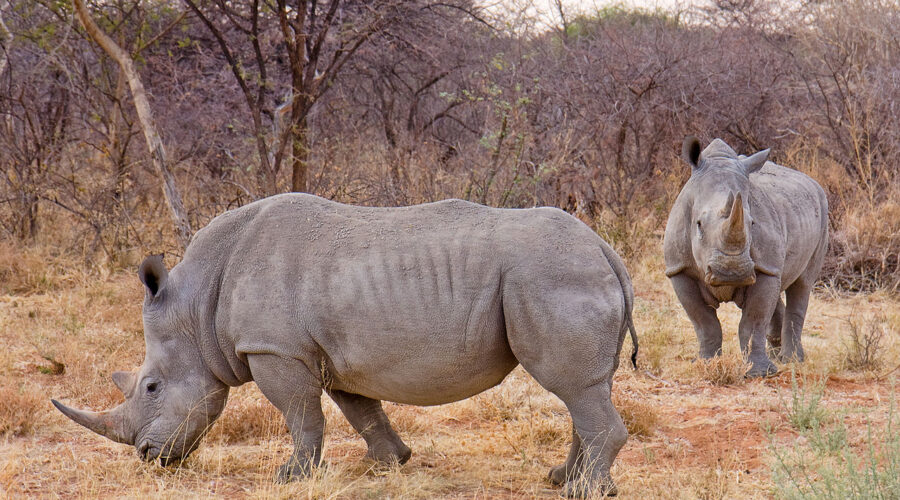
- Rhino: Represented by two distinct species: the larger, grazing White Rhino with its wide, square lip designed for cropping grass, and the critically endangered Black Rhino, a secretive, browser featuring a hooked prehensile lip built for plucking twigs and leaves in dense bushveld.
- Buffalo: Earning the fierce moniker “The Black Death” among old hunters, African Cape buffaloes are notoriously unpredictable and exceptionally protective. Moving in massive, cohesive herds that can number in the hundreds, their collective strength and thick, armor-like horn bosses make them formidable foes even for hungry lion prides.

2. The Little 5
To truly understand the bushveld, one must learn to slow down and look closely at the ground beneath. The “Little 5” share common descriptive names with the heavyweights of the animal kingdom, offering a captivating micro-perspective on African biodiversity.
- Ant Lion: The larval stage of a net-winged insect, famous for engineering clever, upside-down conical pits in soft, dry sand. Sitting buried at the very bottom, the ant lion waits for unsuspecting ants to slip down the crumbling slopes before snapping them up with formidable, hollow jaws.
- Leopard Tortoise: Named for the striking, high-contrast mottled yellow-and-black patterns on its dome-like carapace. As the largest tortoise species in Southern Africa, these slow-moving herbivores play an essential role in seed dispersal across dry, grassy terrain.
- Elephant Shrew: A tiny, incredibly agile insectivore that is actually more closely related to elephants than to true shrews. Equipped with an elongated, highly flexible trunk-like snout, it uses its acute sense of smell to forage through leaf litter for beetles and spiders at breakneck speeds.
- Rhino Beetle: One of the strongest creatures on Earth relative to its size, capable of lifting objects over 800 times its own body weight. Males feature a dramatic, hooked cephalic horn that resembles a rhino’s horn, which they use as a lever to battle rival males for mating rights.
- Buffalo Weaver: Boisterous and highly social black birds recognized by their heavy red or white bills. They construct massive, unkempt communal stick nests in the highest forks of thorny acacia trees, mirroring the loud, dominant presence of the Cape buffalo herds on the ground below.

3. The Ugly 5
Nature does not design animals for human aesthetic standards; it designs them for survival. The “Ugly 5” might not win conventional beauty pageants, but their specialized evolutionary features make them vital cleanup crews, eco-engineers, and resilient survivors.
- Hyena: Far from being mere cowardly scavengers, Spotted Hyenas are exceptionally cunning, highly social apex predators with matriarchal pack structures. Equipped with some of the most powerful jaw-crushing force in the animal kingdom, they can digest skin, bones, and teeth, effectively sanitizing the bushveld.
- Warthog: Tough, leathery-skinned suids that are built for life in arid environments. Characterized by prominent facial calluses (warts) that protect their eyes during fights, large curved tusks for defense, and a comical habit of trotting through the high grass with their thin tails held straight up like antennas.
- Wildebeest: Often lightheartedly described as being built from “spare parts”—featuring the head of an ox, the mane of a horse, and the hindquarters of an antelope. Despite their mismatched appearance, these blue wildebeest form the backbone of massive migratory herds that drive nutrient cycles across grassland ecosystems.
- Marabou Stork: Frequently referred to as the “undertaker bird” due to its dark, cloak-like wings, white underbelly, and completely bald head and neck—an evolutionary adaptation that keeps them clean while feeding inside large carcasses alongside vultures.
- Lappet-faced Vulture: The undisputed heavyweight of the African skies, boasting a wingspan reaching up to 2.9 meters. With its bare, deeply wrinkled pink head and a massive, bone-cracking beak, this dominant bird arrives at a kill site to tear open tough hides, allowing smaller scavengers to feed.

4. The Impossible 5
For seasoned naturalists, trackers, and lifelong safari enthusiasts, ticking off any member of the “Impossible 5” represents the absolute pinnacle of wilderness success. These species are notoriously secretive, highly specialized, critically endangered, or strictly nocturnal.
- Aardvark: An elusive, nocturnal burrowing mammal whose Afrikaans name translates to “earth pig.” Outfitted with heavy, shovel-like claws, thick hide to repel insect bites, and a long, sticky tongue, the aardvark can excavate tough termite mounds in minutes, consuming tens of thousands of insects in a single night.
- Pangolin: The Temminck’s Ground Pangolin is a armor-plated mammal covered in tough keratin scales. Because they roll into an impenetrable, tight sphere when threatened and move silently at night, encountering a wild, untracked pangolin is widely considered the rarest sighting in all of Southern Africa.
- Cape Mountain Leopard: Genetically distinct, noticeably smaller, and far more reclusive than its savannah relatives, this secretive predator inhabits the rugged, rocky mountain passes of the Western and Eastern Cape. They possess expansive home ranges and navigate treacherous terrain completely out of human sight.
- Riverine Rabbit: One of the most endangered mammals on the continent, with fewer than 250 mature individuals estimated to remain in the wild. Endemic exclusively to the semi-arid central Karoo, this nocturnal rabbit depends entirely on deep, soft alluvial soil along seasonal riverbeds to dig its underground breeding burrows.
- Honey Badger: World-renowned for its unmatched tenacity, thick rubbery skin that resists teeth and bee stings, and complete lack of fear. Honey badgers will fearlessly take on venomous snakes, dig out subterranean beehives, and even stand their ground against a pride of curious lions.

Sustainability & Ethics
At Africa Big 5 Safaris, we believe every creature—from the massive Elephant to the tiny Ant Lion—plays a vital role in our ecosystem. We follow strict ethical viewing guidelines to ensure our presence never disrupts the natural behavior of these incredible animals.

Deepening your understanding of Southern Africa’s wildlife tiers enhances every game drive, transforming standard viewing into an active tracking adventure across diverse ecosystems.
To explore how these animal series fit into our broader regional itineraries, dive into our detailed destination guides—including The Best Time to Visit Eswatini:
and our article on How to Travel Responsibly: Leaving a Positive Footprint in Lesotho and the Kruger Bush.
To experience these species firsthand across varying habitats, pair your reading with our premier hand-picked itineraries. Book The Ultimate Kruger and Walk with the Lions Safari Combo
for guaranteed apex predator encounters, or explore cross-border wilderness corridors on The Ultimate Cross-Border Heritage Tour: Eswatini & Northern KwaZulu-Natal
and The Ultimate 5-Day Eswatini & Kruger Combo Safari
For malaria-free reserve options close to the city, browse our Dinokeng Game Reserve Safari Options.
What is the origin of the “Big 5”?
The term “Big 5” was originally created by 19th-century big-game hunters to describe the five most dangerous African animals to hunt on foot (Lion, Leopard, Elephant, Rhino, and Buffalo). Today, conservationists and safari operators have reclaimed the phrase for wildlife photographic safaris, expanding the concept into distinct groupings like the Little 5, Ugly 5, and Impossible 5 to highlight the full biodiversity of the African bushveld.
Which animals make up the “Little 5” and why are they named that way?
The Little 5 consists of the Ant Lion, Leopard Tortoise, Elephant Shrew, Rhino Beetle, and Buffalo Weaver. Each of these small creatures shares a descriptive name with a member of the iconic Big 5, serving as a creative way to encourage safari-goers to look closely at macro-insects, birds, and smaller species that keep the ecosystem balanced
Why are the “Ugly 5” so important to the African ecosystem?
While the Ugly 5 (Hyena, Warthog, Wildebeest, Marabou Stork, and Lappet-faced Vulture) are humorously named for their uncoventional appearances, they are vital to environmental health. Hyenas and vultures act as nature’s sanitation squad by clearing carcasses and preventing disease, while wildebeest and warthogs shape vegetation patterns and nutrient cycles across the savannah.
What makes sighting the “Impossible 5” so rare on safari?
The Impossible 5 (Aardvark, Pangolin, Cape Mountain Leopard, Riverine Rabbit, and Honey Badger) are considered the “Holy Grail” sightings because of their elusive nature. Most of these animals are strictly nocturnal, possess exceptional camouflage, inhabit remote or specialized micro-habitats, or are critically endangered with very small wild populations.
Which regions in Southern Africa give you the best chance of seeing all these animal groups?
Traversing broad, multi-ecosystem regions—such as crossing Kruger National Park from South to North, or touring from KwaZulu-Natal through Eswatini—provides the highest sighting potential. Combining classic savannah drives with guided bush walks and night game drives allows trackers to spot everything from large carnivores to nocturnal burrowers and micro-creatures.


